
Remembers
What happened, across everything you hold. It answers from the transactions rather than from anyone’s memory of them, in whatever form you already work in.
AI PRODUCTIVITY AGENTS
They have read every record, every filing and every prior case. A person reads what the day allowed.
Could be built
SALES
From 2% reply rate
to 10%
Against the same territory, measured on our client’s own prior campaigns.
RESEARCH
From 7 to 10 analyst days
to 20 minutes
A full initiation report, start to finish.
FINANCE
From 2 to 5 days
to 30 seconds
To assemble a full briefing pack by hand.
INTELLIGENCE
Not faster.
Different.
Every call, email and meeting note becomes structured. Share what happened once, and the next meeting starts knowing what was promised, priced and resisted.
Writing was the easy part. What changed is that an agent can go through everything your business already holds, work out what matters in it, and then do something about it, with a person approving anything it cannot undo. There are four things it can do with what you know.
Remembers
What happened, across everything you hold. It answers from the transactions rather than from anyone’s memory of them, in whatever form you already work in.
Investigates
What is true about a customer, a market or a territory. It assembles the picture from the public record and from your own history, and writes it up.
Projects
What to expect, from your own history rather than a recommendation you take on trust. The workings stay visible, so the number survives being challenged.
Interacts
It works inside the systems you already run. It finds, scores, contacts and files, and stops for a person to approve anything it cannot undo.
Most useful agents span more than one. The four below all do.
01 / LEAD GENERATION
Running in a client’s business
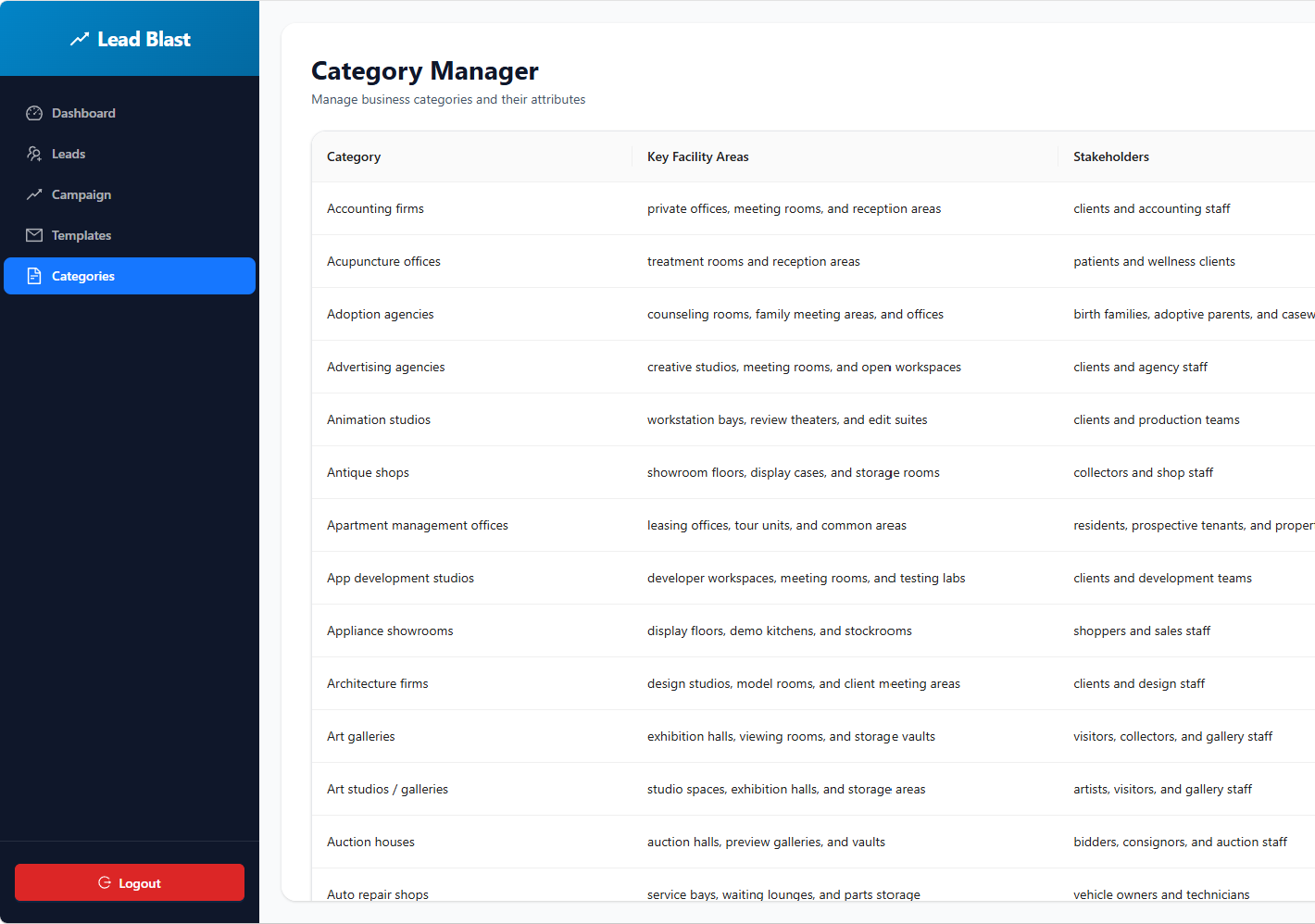
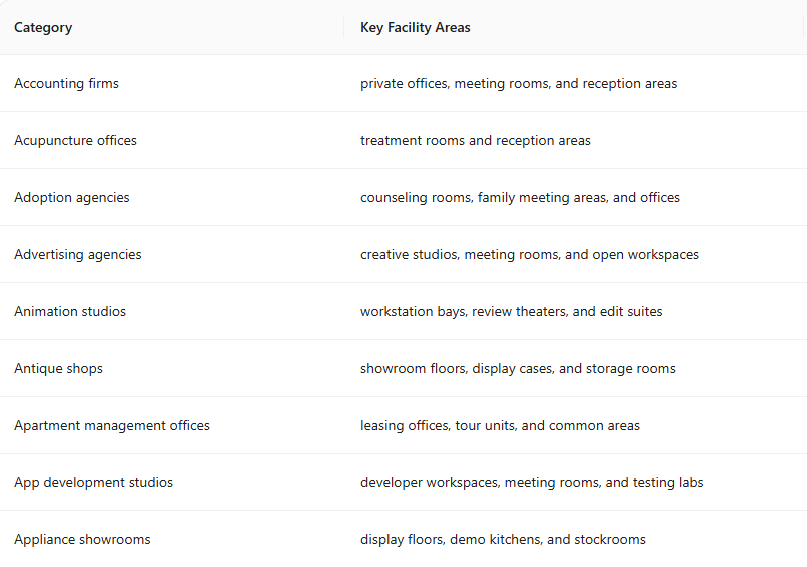
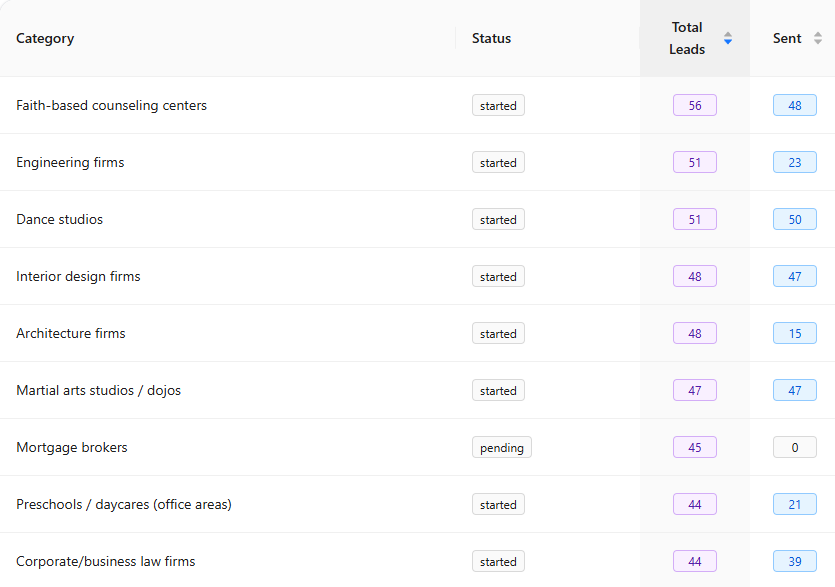
It searches by service and postcode, then by ratings. It pulls each prospect’s site and social footprint, scores them, and discards the ones that do not qualify. That is the part that separates an agent from a scraper.
What survives, it writes to. Custom emails, drafted and sent.
10% reply rate, against a 2% baseline on the same territory, measured against the client’s own prior campaigns.
Sector and territory: commercial cleaning services, Denver.
02 / EQUITY RESEARCH
Built on published accounts
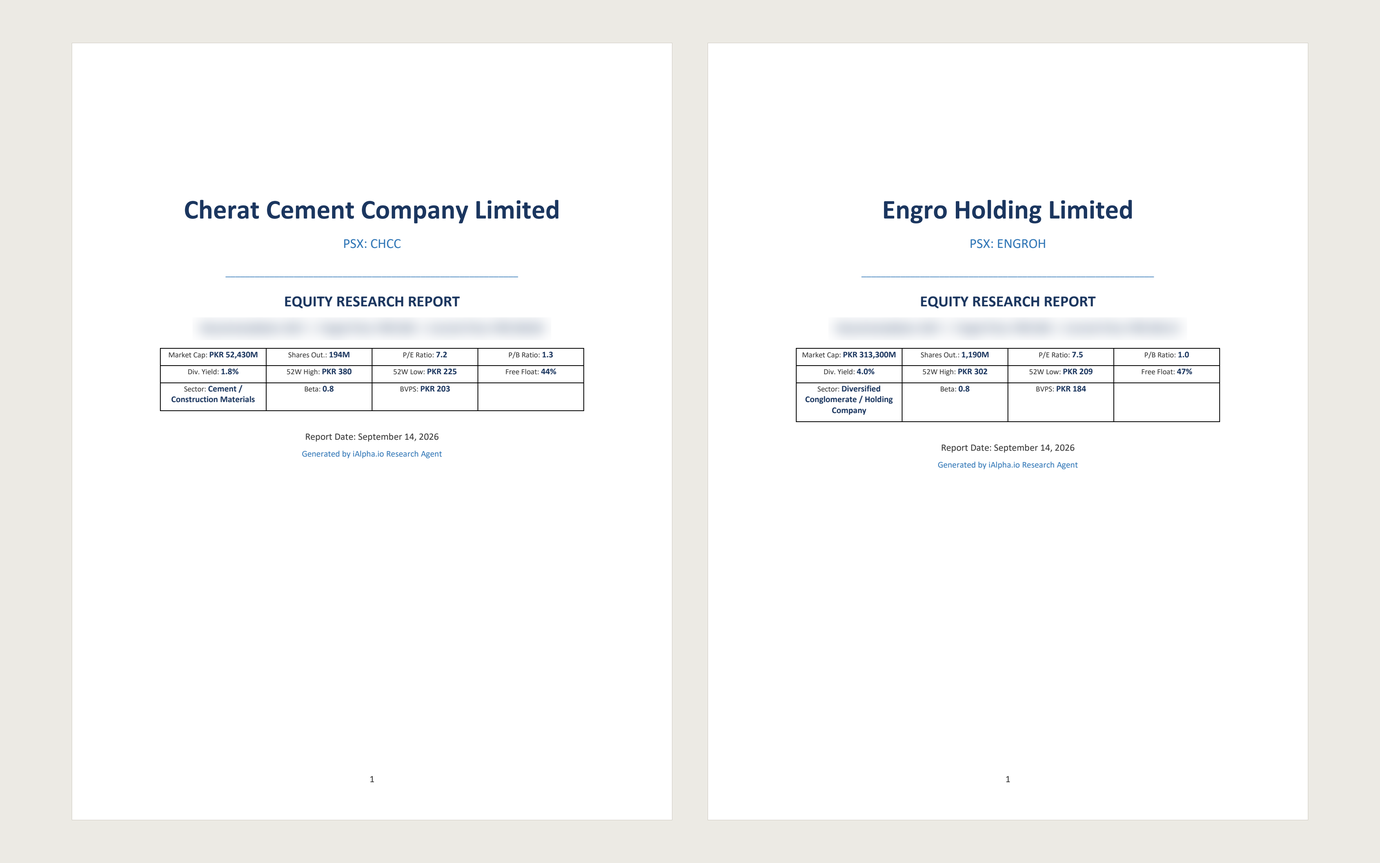
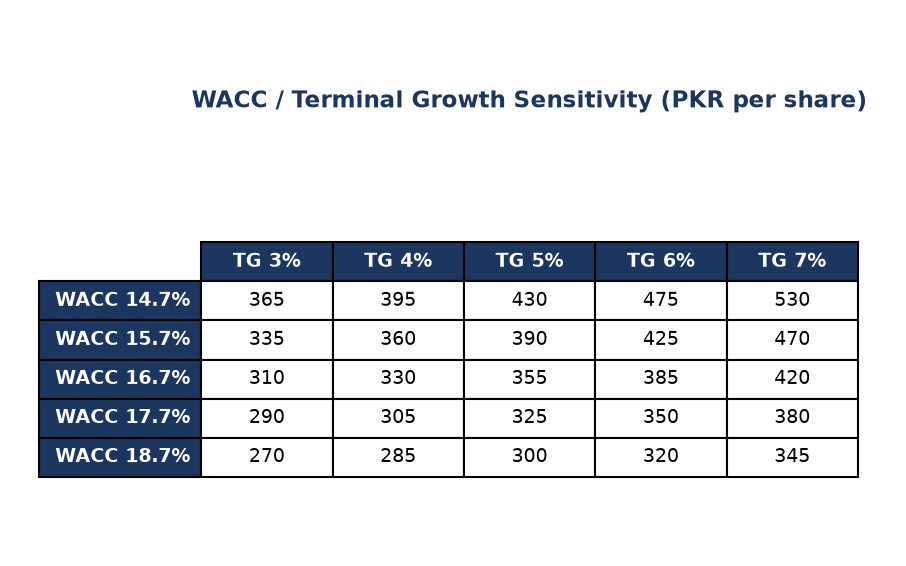
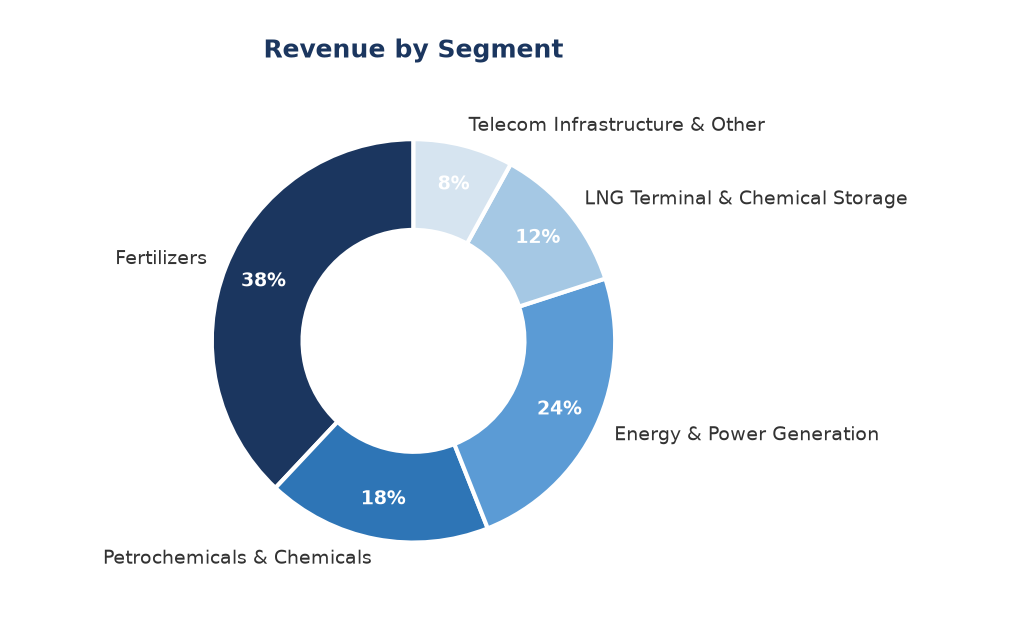
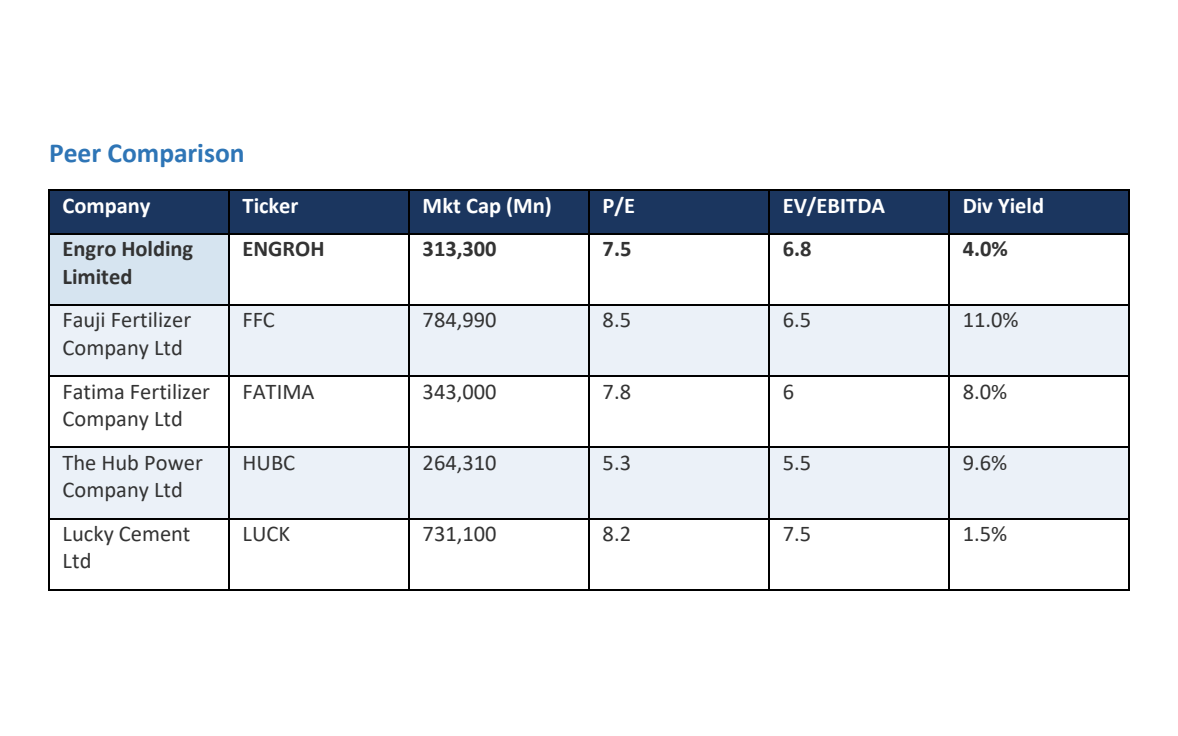
It covers publicly listed Pakistani companies and produces a finished report of a dozen pages: projections, a peer comparison, a valuation and its sensitivities.
Every historical figure comes from a public source, which means you can check it, and so can the person you send it to.
7 to 10 analyst days, down to 20 minutes. An initiation is the heavy one: the full model, built from scratch.
03 / CFO AGENT
Built on published accounts
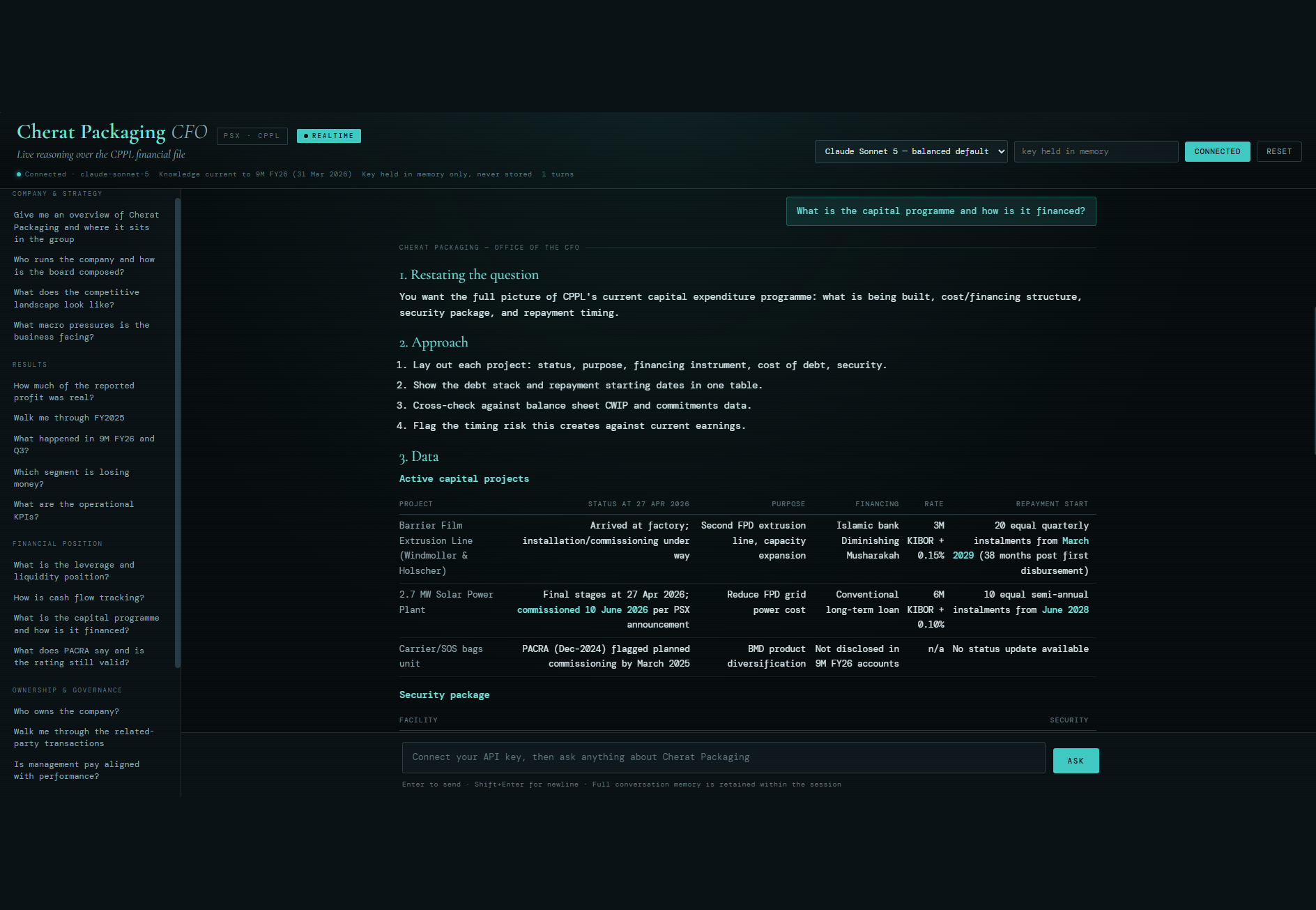
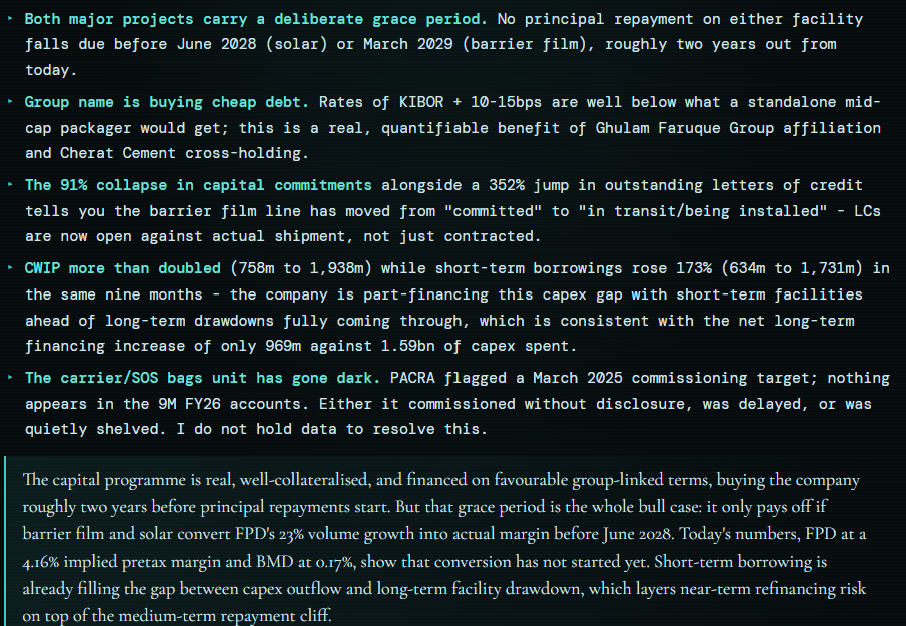
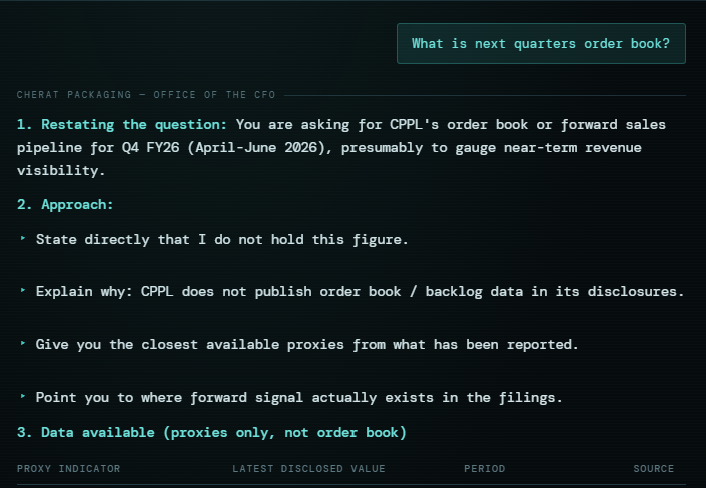
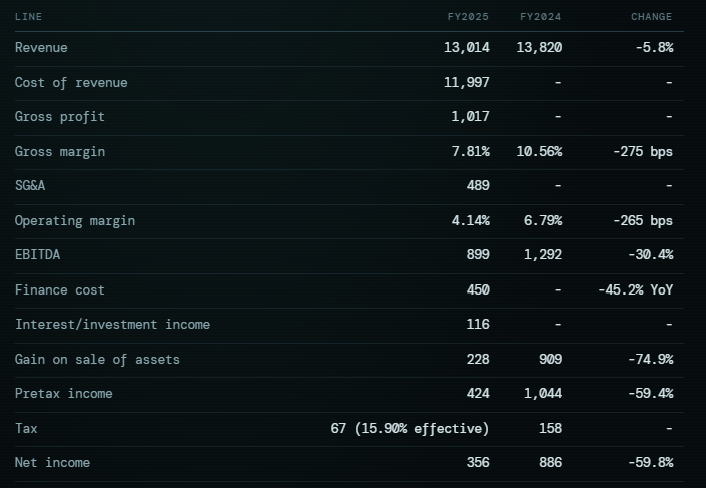
It reasons over a curated file of accounts, segments, cash flow, related parties, ownership and risk, and answers questions about the business the way the person who runs its finances would. It flags the risk unprompted, and it says so plainly when it does not hold the answer.
2 to 5 days, down to 30 seconds, against assembling the same briefing pack by hand.
Built against the published accounts of companies in cement, packaging and sugar. Every figure comes from a public source you can check, which is more than we can show you for the work we run under NDA.
04 / CUSTOMER INTELLIGENCE
Built
It captures every interaction with an account, including the spoken ones, alongside the sales history, and turns it into what the next meeting actually needs: what was promised, what was priced, and what was resisted.
It feeds pricing with what the account has actually paid, rather than what the file says it pays.
The other three save time. This one surfaces patterns and projections you would not otherwise see, the ones a person would need to have read every call note to notice.
These are what Triage inventories, function by function. If something in your business fits one of them, it is a candidate, and you can work that out before you speak to us.
Repeated decisions
The same judgement made again and again, on the same kind of information, by someone senior enough that it queues.
Document flows
Something arrives, someone reads it, something is produced. Invoices, reports, filings, applications.
Handoffs
Work that stops while it waits for a person to pick it up, and where most of the elapsed time is the waiting.
Not everything that fits is worth building. That is what Triage is for. It ranks the whole set on value, feasibility and time to impact, and tells you which ones to leave alone.
We specify every agent, review the specification with your team, and build the pilot ourselves. When it is working and you have signed it off, our engineering partner Delivery Devs takes it into your systems and engineers it to run in production.
That split is deliberate, and it is not a handover of responsibility. Production is where agents fail. The exception nobody documented, the upstream system that quietly changes its output, the owner who left. It deserves engineers who do nothing else, and it still gets specified, reviewed and signed off by us.
Everything runs inside your environment, under access you approve, and what we build is assigned to you at handover.
Bring us the one you cannot stop thinking about. If it is buildable we will tell you how, and if it is not we will tell you that instead, before anyone quotes you for it.
Or reach us however is easiest:
It is with a founder now. Not a coordinator.
You will hear back within two working days.